
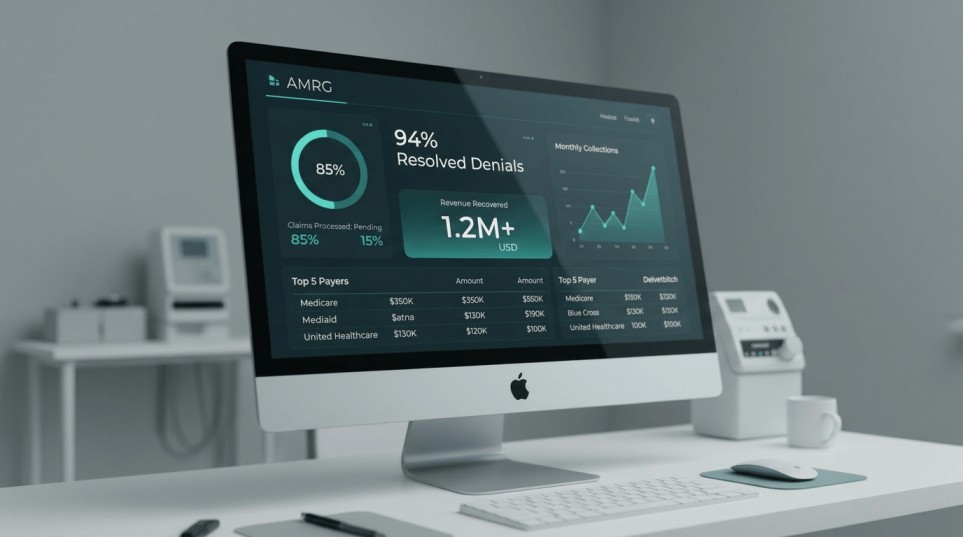
Key Takeaways: Claim denial rates average 10–15% in 2026 but up to 65% are recoverable. CO-16 and CO-97 account for the majority of avoidable denials. Automated scrubbers miss payer-specific nuances that require human expertise. A systematic denial audit can recover thousands in revenue most practices assume is gone permanently.
In 2026, private practices are under more financial pressure than ever. Payers are deploying increasingly sophisticated AI systems to audit claims, Medicare Advantage denial rates have climbed steadily, and administrative teams are stretched thin trying to keep up. The promise of billing automation was supposed to solve this. It has not — at least not completely. While automated scrubbers have improved clean claim rates on the front end, they consistently fail at the back end when a denial lands in the queue and requires nuanced human judgment to resolve. Understanding the specific medical billing denial codes that are hitting your practice in 2026 and knowing exactly how to fix each one is the difference between a thriving revenue cycle and thousands of dollars in write-offs your team has quietly stopped chasing. This guide breaks down the five most common denial codes hitting US private practices right now, what each one actually means, why it happened, and the exact steps your billing team needs to take to appeal, correct, and resubmit successfully.
Quick Reference: The 5 Most Common Denial Codes in 2026
Denial Code | Description | Most Common Cause | Recoverable? |
|---|---|---|---|
| CO-16 | Claim lacks information | Missing or invalid data fields | Yes — with correction |
| CO-97 | Benefit included in allowance | Bundling issue | Yes — with modifier |
| CO-4 | Modifier issue | Incorrect or missing modifier | Yes — with correction |
| CO-50 | Non-covered service | Medical necessity not established | Sometimes |
| PR-96 | Non-covered charge | Patient benefit limitation | Case by case |
Denial Code 1 — CO-16: Claim or Service Lacks Information
What it means
CO-16 is one of the most common denials in 2026 and one of the most frustrating because it is vague by design. The payer is telling you that the claim is missing required information to process payment — but it does not always tell you what that information is.
The root cause
CO-16 denials typically stem from missing or invalid fields such as referring provider NPI, date of injury or onset, prior authorization number, or incomplete diagnosis codes. It can also trigger when a required attachment such as operative notes or a certificate of medical necessity was not included with the submission.
The fix
- Pull the remittance advice and identify the remark code attached to CO-16 — common codes include M76 (missing clinical information), M79 (missing provider information), and N95
- Match the remark code to the specific missing field in your practice management system
- Correct the field, attach any required documentation, and resubmit as a corrected claim using the original claim number
- If the remark code is unclear, call the payer’s provider line before resubmitting to avoid wasting a timely filing window
- Document the fix in your denial log to identify if this code is recurring on specific payer contracts
Denial Code 2 — CO-97: Benefit for This Service Is Included in the Payment for Another Service
What it means
CO-97 tells you that the payer has already paid for the service you are billing, either as part of a bundled payment for a different procedure performed on the same date, or as part of a global surgical package.
The root cause
This denial almost always comes down to a modifier issue. The procedure was performed and documented correctly, but the claim did not include the modifier that tells the payer this service was separate and distinct from the bundled procedure. The most common culprits are missing Modifier 59 (distinct procedural service), Modifier 25 (significant and separately identifiable E&M service), or XU, XE, XS, XP — the more specific NCCI-preferred modifiers.
The fix
- Check the NCCI edits for the procedure code combination on the date of service
- Review the clinical documentation to confirm the service was genuinely separate and distinct — modifier appending without clinical support creates a compliance risk
- Add the appropriate modifier (typically Modifier 59 or its X-modifier equivalents) and resubmit as a corrected claim
- If the denial is related to a global surgical package, confirm whether the service falls within the global period and whether an exception applies
- For recurring CO-97 denials on specific code pairs, flag those combinations for pre-submission review in your billing workflow
Denial Code 3 — CO-4: The Service Is Inconsistent With the Modifier
What it means
CO-4 means a modifier was included on the claim but it is either invalid for that procedure code, inconsistent with the place of service, or conflicts with another modifier already on the claim.
The root cause
This denial is common when billing teams apply modifiers systematically without verifying payer-specific modifier requirements. A modifier that is accepted by one payer may be rejected or flagged as inconsistent by another. It is also common when bilateral procedure modifiers or anesthesia modifiers are applied incorrectly.
The fix
- Pull the claim and review every modifier appended to the procedure code in question
- Cross-reference the modifier against the payer’s fee schedule and the AMA CPT guidelines for that specific code
- Remove any modifier that does not have direct clinical documentation support
- Check for modifier conflicts — for example, Modifier 50 (bilateral) and Modifier RT/LT should not appear together on the same line
- Resubmit corrected claim and note the payer’s specific modifier policy in your payer contract reference sheet for future submissions
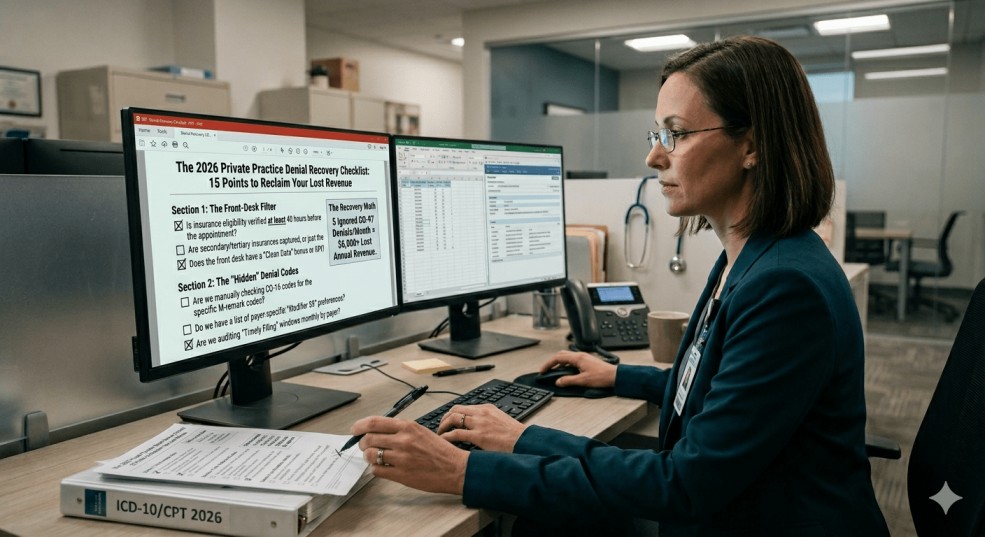
Denial Code 4 — CO-50: The Service Is Not Deemed Medically Necessary
What it means
CO-50 is the denial that keeps billing managers up at night. The payer has reviewed the claim and determined that the service does not meet their criteria for medical necessity based on the diagnosis codes submitted.
The root cause
This denial happens when the diagnosis code submitted does not support the medical necessity of the procedure in the payer’s coverage policy, even if the treating physician clearly documented the clinical rationale. It is especially common with diagnostic imaging, specialist referrals, and certain preventive services that cross into treatment territory.
The fix
- Obtain the payer’s Local Coverage Determination (LCD) or National Coverage Determination (NCD) for the procedure code
- Review the clinical documentation against the LCD criteria, if the physician’s notes support medical necessity but the diagnosis code does not reflect it, work with the provider to add a more specific supporting diagnosis code if clinically accurate
- Write a formal appeal letter citing the specific LCD criteria and attaching relevant clinical documentation including office notes, lab results, or imaging reports
- Submit the appeal within the payer’s timely filing window most payers allow 30–180 days for appeals
- For high-value CO-50 denials, consider a peer-to-peer review request where the treating physician speaks directly with the payer’s medical director
Denial Code 5 — PR-96: Non-Covered Charge or Patient Benefit Limitation
What it means
PR-96 indicates that the service is not covered under the patient’s current benefit plan. The PR prefix is important; it means patient responsibility, not a billing error on your part.
The root cause
This denial often occurs when eligibility verification was either not performed before the visit or was performed incorrectly. The patient’s plan may have a specific exclusion for the service, the benefit may be exhausted for the plan year, or the service may require a rider or supplemental coverage the patient does not have.
The fix
- Confirm that eligibility verification was completed before the date of service and review what was returned
- Check whether the denial is truly a benefit exclusion or whether it could be a coding issue that made a covered service appear non-covered
- If the service is genuinely not covered, bill the patient directly in accordance with your financial policy and the patient’s signed ABN (Advance Beneficiary Notice) if applicable for Medicare patients
- If the patient was not informed of the non-coverage before the service, review your financial consent and ABN process, this is both a compliance issue and a collections risk
- Use this denial as a trigger to review your pre-visit eligibility verification workflow and ensure benefit details including exclusions are captured and communicated to patients before every appointment
Why Automation Often Fails to Resolve These Denials
Automated claim scrubbers are valuable tools. They catch missing fields, flag obvious code conflicts, and reject claims before they hit the payer — preventing many CO-16 denials before they happen. In 2026, most well-run practices use some form of front-end scrubbing as standard practice.
But here is where automation consistently falls short.
Payer-specific quirks are not in the algorithm
Every major payer, UnitedHealthcare, Aetna, BCBS, Humana, Cigna, has coverage policies, modifier preferences, and LCD interpretations that differ from CMS guidelines and from each other. An automated system applies universal rules. A human billing specialist who works with a specific payer every day knows the exceptions, the undocumented preferences, and the most effective language for appeal letters.
Medical necessity requires clinical judgment
CO-50 denials cannot be resolved by a software rule. They require someone who understands both the clinical documentation and the payer’s LCD criteria well enough to build a case. Automated systems flag the denial. They cannot write the appeal.
Denial patterns require strategic thinking
When CO-97 keeps appearing on the same procedure code combination across multiple dates of service, that is a systemic workflow problem — not just a coding error. Identifying and fixing that pattern requires a human analyst reviewing denial trends, not just a report.
Timely filing windows are unforgiving
Automated systems can generate worklists, but if no human is prioritizing high-value denials by payer deadline, money walks out the door permanently. A denial that expires its appeal window is gone, no software can recover it after that point.
At AMRG, our billing specialists combine denial management expertise with payer-specific knowledge built from working with private practices across more than 12 specialties. We do not just resubmit denials — we analyze root causes, fix upstream workflow gaps, and build a denial prevention layer that reduces the volume of denials hitting your practice month after month.
The Financial Impact of Ignored Denials
The average denial rate for private practices in the US sits between 10 and 15 percent of submitted claims. Of those denied claims, industry data consistently shows that 50 to 65 percent are recoverable but only if someone acts on them within the timely filing window.
For a practice billing $100,000 per month, a 12 percent denial rate means $12,000 in claims denied every single month. If 60 percent of those are recoverable, that is $7,200 in revenue sitting in a denial queue. Multiply that by 12 months and you have $86,400 in potentially recoverable revenue per year that most practices are writing off quietly.
That is not a billing problem. That is a business problem.
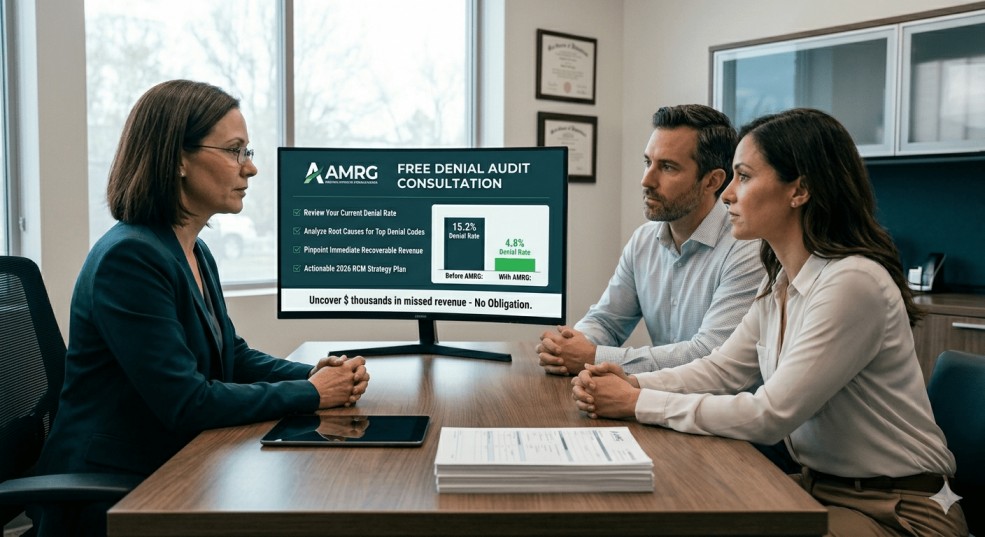
Ready to Find Out How Much Revenue Your Denials Are Hiding?
AMRG offers a free Denial Audit for US private practices. In this 30-minute audit, our denial management specialists will:
- Review your current denial rate by payer and code
- Identify your top 5 denial categories and their root causes
- Estimate the recoverable revenue sitting in your aged A/R
- Give you a clear action plan — whether you work with us or not
There is no obligation and no cost. Just a clear picture of what your denials are actually costing your practice.
Schedule your free Denial Audit at amrgbilling.com/contact-us





Pingback: Revenue Cycle Management in 2026: What Every Private Practice Needs to Know | AMRG